

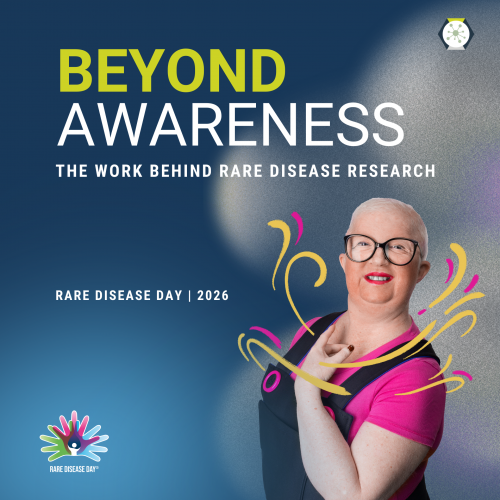
For patients and families, awareness is vital; it affects how quickly symptoms are recognized, how long it takes to get an accurate diagnosis, and how easily they can find community rather than navigating a complex condition alone. Awareness also drives sustained interest in research, which is crucial for advancing progress toward meaningful therapeutic options. However, awareness alone does not deliver new therapies.
Therapeutic advances are realized through years of building understanding, deliberate study design, careful data analysis, sustained collaboration, and strategic regulatory engagement. Awareness creates momentum, but the rigor of the subsequent research, and how that research is communicated, determines whether that momentum translates into real therapeutic options that reach patients.
Rare Disease Research Means Every Patient Counts
In rare diseases, patient populations are small and are geographically dispersed. Clinical expertise is often concentrated in a limited number of centers, and access to specialists or diagnostic testing can remain a substantial barrier. Patients and families often experience years of uncertainty, extensive travel, and significant physical, emotional, and financial strain while working toward a diagnosis and management plan.
Trial Design and Endpoint Strategy in Rare Diseases
Generating change in rare disease requires rigor throughout development. Rigor is not a barrier to progress; it’s what makes progress credible. At JB Ashtin, we support our clients as they navigate and communicate the complexities of endpoint selection, trial design, and data interpretations.
The endpoint strategy is a vital component of clinical trial design. In many rare conditions, appropriate, validated outcomes don’t yet exist. To develop new endpoints, it is essential to collaborate closely with clinical experts and patient communities. This collaboration ensures that measurements reflect the real-world impacts on symptom burden, functioning, and quality of life. In other situations, existing clinical outcomes aren’t sensitive enough to detect change within practical timelines, making surrogate endpoints necessary. These endpoints require clear justification of their biological plausibility and their relationship to clinically meaningful outcomes that matter to patients.
Other aspects of trial design demand similar thoughtfulness.
- Eligibility criteria and activity schedules must balance scientific validity with operational feasibility and practical realities of participation for patients
- Statistical analysis plans must anticipate and address variability and uncertainty
- Innovative trial designs may be appropriate when patient numbers are limited, but innovation must be grounded in sound methodology
Once a trial is designed and conducted, nuance and discipline remain important when interpreting findings. Efficacy and safety signals must be seen in context, considering study limitations, to avoid overinterpreting benefits or prematurely dismissing promising signals. In many rare diseases, especially those with limited natural history data, long-term follow up is necessary to understand durability of responses and safety profiles. Progress is sustained only through careful accumulation of credible evidence.
Collaboration as a Driver of Progress
Rare disease research is inherently collaborative. Partnerships with patient advocacy organizations help ensure that development programs focus on outcomes that are meaningful for daily life and feasible for patients and families who may be traveling great distances to participate in trials. Natural history studies and patient registries, often built in partnership with advocacy groups, provide essential context for understanding disease progression and interpreting clinical trial results. Engagement with clinical experts is critical for scientific insight as well as clinical trial recruitment and execution.
Early and ongoing regulatory collaboration is crucial to generating change. The FDA has articulated its commitment to advancing rare disease drug development through new evidence principles that recognize the practical constraints of small populations. It’s often infeasible to conduct multiple large traditional trials in rare diseases, and regulators and sponsors must work together to align on expectations.
Internal collaboration is just as important. Clinical development, biostatistics, regulatory strategy, medical affairs, and scientific communications teams must stay aligned to maintain continuity of expertise, clarity in strategic direction, and consistency in scientific messaging. When expertise is fragmented or messaging is inconsistent, patients ultimately bear the consequences of delayed development or confusion about progress and findings.
The Responsibility of Scientific Communication
Our work in scientific communication plays an important role in protecting patient trust and advancing informed decision-making. The language we use matters, and thoughtful context and precise statements are important. Overstated conclusions can create unrealistic expectations in close-knit patient communities, while safety findings that lack proper context can generate unnecessary fear. Transparent discussion of study designs and limitations and accurate descriptions of results protect scientific credibility and patient expectations.
Scientific communication also has a vital educational function.
- Clinicians may need support in understanding evolving diagnostic frameworks or the rationale behind novel endpoints
- Patients and their families seek clear explanations of study findings and realistic expectations regarding benefits and risks involved
- Regulators and payers rely on a clear explanation of the clinical importance and the boundaries of evidence
In rare diseases, evidence accumulates gradually. Each presentation, publication, advisory meeting, or regulatory document builds part of the scientific foundation. Careful interpretation and thoughtful framing help ensure that individual datasets strengthen the broader evidence base and convert isolated scientific findings into durable knowledge that can meaningfully improve patient care.
From Awareness to Meaningful Impact

Rare disease research rarely advances in dramatic breakthroughs. More often, progress is incremental: a more robust natural history dataset, a newly validated outcome measure, a refined protocol, a more comprehensive safety profile. Each step may appear modest on its own, but together they form the foundation for meaningful therapeutic advancement.
Rare Disease Day calls for awareness and change. Awareness is the starting point, but the change we seek for patients and their families results from sustained, collaborative, and disciplined science. We’re proud to play a role in that process, helping to convert each scientific step into meaningful progress for patients.
Let's Build What's Next, Together
We know how crucial it is to get it right in medical communications. If you’re looking for a partner who can balance creativity with compliance and deliver impactful results –